Centre for Spirituality and Human Development
XLRI – Xavier School of Management, Jamshedpur, India
The 2nd International Pre-conference Conclave
Spirituality and Human Development in Management
Spiritual Intelligence in Leadership: Cultivating Inner Wisdom for Compassionate and Effective Decision-Making
An international online conclave bringing together leading scholars from the USA, Canada, the Netherlands, China, and India.
Speakers’ Biographies & Conclave Abstracts
Programme Booklet
- Date
- Saturday, 25 July 2026
- Time
- 8:45 AM – 1:00 PM (IST)
- Mode
- Online (Zoom)
- Session Chair
- Dr Sai Bhargavi Vedula
Contents & Programme
25 July 2026
- 1Ms. Cindy Wigglesworth — Deep Change, Inc., USA03
- 2Prof. Thomas Culham — City University / Simon Fraser University, Canada05
- 3Prof. Dr. Sharda S. Nandram — Nyenrode Business Universiteit, The Netherlands07
- 4Prof. Stephan Rothlin, SJ — University of Saint Joseph, Macau / Peking University09
- 5Prof. Arup Varma — Loyola University Chicago, USA · Panel Moderator11
- 6Prof. Sanjoy Mukherjee — IIM Shillong, India · Panel Moderator12
- 7Dr. Sai Bhargavi Vedula — XLRI Jamshedpur, India · Session Chair13
Programme Schedule — 25 July 2026 · 08:45 AM – 01:00 PM (IST)
| Time (IST) | Session | Speaker / Lead |
|---|
| 08:45 – 09:00 |
Inaugural Session: Welcome Address and Opening Remarks |
— |
| 09:00 – 09:40 |
Keynote Address“Spiritual Intelligence in Leadership and Workplace Spirituality: Developing Inner Wisdom for Human Flourishing and Organisational Transformation” |
Ms. Cindy Wigglesworth |
| 09:50 – 10:30 |
Keynote Address“Management Education and Inner Work: Developing Pedagogies for Personal Spiritual Development” |
Prof. Thomas Culham |
| 10:40 – 11:20 |
Keynote Address“Spirituality in Management as an Emerging Discipline” |
Prof. Sharda S. Nandram |
| 11:30 – 12:10 |
Keynote Address“Moral Leadership and Comparative Spirituality in a Changing World of Artificial Intelligence: A Roadmap of AI and Applied Ethics” |
Prof. Stephan Rothlin, SJ |
| 12:20 – 12:50 |
Panel Discussion and Interaction with Participants“The Future of Spiritual Intelligence in Leadership: Integrating Spirituality, Ethics, Human Development, and Management” |
Prof. Arup Varma · Dr. Sai Bhargavi Vedula · Prof. Sanjoy Mukherjee |
| 12:50 – 01:00 |
Vote of Thanks and Closing Remarks |
— |
Please note: A 10-minute Q&A session follows each keynote address; participants are encouraged to submit their questions in writing. Registration is free and mandatory in advance. E-certificates will be issued to participants who register and attend the entire conclave.

Keynote Speaker 1
Ms. Cindy Wigglesworth
Founder and President, Deep Change, Inc.
Houston, Texas, USA
Author of SQ21: The Twenty-One Skills of Spiritual Intelligence.
A Brief Biography
Cindy Wigglesworth is an internationally recognised leadership consultant, keynote speaker, and bestselling author specialising in spiritual intelligence, conscious leadership, and organisational transformation. She is the founder and President of Deep Change, Inc., a leadership development and consulting firm dedicated to helping individuals and organisations cultivate the inner capacities needed for effective, ethical, and purpose-driven leadership.
Before founding Deep Change in 2000, Cindy spent two decades in Human Resources management at ExxonMobil, where she developed extensive expertise in leadership development and organisational effectiveness. Her work integrates emotional, social, and spiritual intelligence to help leaders navigate complexity, foster collaboration, and build resilient, values-based organisations.
Cindy is the author of the award-winning bestseller SQ21: The Twenty-One Skills of Spiritual Intelligence (2012), recipient of the 2013 Eric Hoffer Book Award in the Spiritual category. She developed the internationally recognised SQ21 Spiritual Intelligence Self-Assessment, one of the first validated, culturally inclusive assessment tools for measuring spiritual intelligence in workplace and leadership contexts. Her pioneering work has helped organisations engage in meaningful conversations about purpose, values, ethics, and human flourishing.
A sought-after international speaker, Cindy has delivered keynote addresses and workshops for leading conferences and organisations, including Conscious Capitalism, Spirit at Work, Business and Consciousness, Integral Leadership in Action, and the World Business Academy. She has also appeared on The Oprah Winfrey Show, PBS, Fox News, and TEDx, where she has shared insights on the transformative role of spiritual intelligence in leadership and personal development.
Through her research, writing, and consulting, Cindy continues to advance the integration of spiritual intelligence into leadership education and organisational practice, empowering leaders to create compassionate, purpose-driven, and sustainable workplaces.
Conclave Abstract
Keynote 1 · 09:00 – 09:40 AM
Keynote Address
Spiritual Intelligence in Leadership and Workplace Spirituality: Developing Inner Wisdom for Human Flourishing and Organisational Transformation
Cindy WigglesworthPresident, Deep Change, Inc., USA
As organisations face increasing complexity, uncertainty, and rapid change, leaders require capacities that extend beyond technical expertise and emotional intelligence. This presentation explores the role of Spiritual Intelligence (SQ) as a foundational capability for ethical leadership, resilience, human flourishing, and organisational transformation. While Emotional Intelligence (EQ) enables individuals to understand and manage emotions, Spiritual Intelligence equips leaders to navigate complexity by shifting from an ego-centred perspective to the wisdom and purpose of the Higher Self.
The SQ21 Framework presents a practical, research-based model comprising 21 measurable skills of Spiritual Intelligence, each defined across progressive levels of mastery from beginner to expert. Central to this model is the SQ21 Spiritual Intelligence Self-Assessment, a validated and culturally inclusive instrument that has been successfully applied in organisations of varying sizes to support leadership development, strengthen organisational culture, and improve measurable workplace outcomes.
The presentation introduces key concepts, including spirituality, religion, Spiritual Intelligence, the ego, the Higher Self, and the complementary relationship between Emotional Intelligence and Spiritual Intelligence. It also highlights the inclusive language and glossaries developed to enable individuals from diverse religious and cultural traditions to engage meaningfully with the SQ21 framework.
The session concludes by presenting research demonstrating a strong positive relationship between SQ21 assessment scores and higher stages of adult development, together with a case study illustrating measurable organisational improvements achieved through focused development of Spiritual Intelligence skills. Participants will gain practical insights into cultivating inner wisdom, purpose-driven leadership, and organisational environments that foster resilience, collaboration, and sustainable human flourishing.
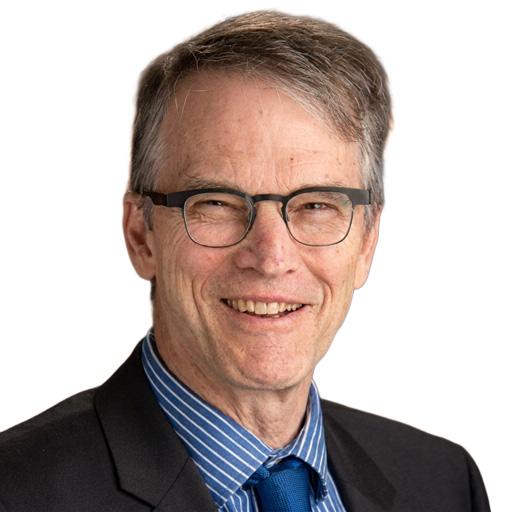
Keynote Speaker 2
Prof. Thomas Culham
Programme Director, School of Management, City University, Canada
Visiting Lecturer, Beedie School of Business, Simon Fraser University, Vancouver, Canada
Chair, Management, Spirituality and Religion (MSR) Division, Academy of Management.
A Brief Biography
Prof. Thomas Culham is an educator, researcher, and author whose scholarship explores ethics, leadership, contemplative pedagogy, and holistic management education. After an accomplished career in engineering and senior business leadership within the resource sector, he transitioned to academia to investigate how ancient wisdom traditions and contemporary scientific perspectives can enrich leadership development and management education.
He currently serves as Programme Director at the School of Management, City University, Canada, and as a Visiting Lecturer at the Beedie School of Business, Simon Fraser University. He also serves as Chair of the Management, Spirituality and Religion (MSR) Division of the Academy of Management, contributing to international scholarship on spirituality, ethics, and responsible leadership.
Prof. Culham earned his PhD in Educational Theory and Practice (Philosophy of Education) from Simon Fraser University and was awarded the Dean of Graduate Studies Convocation Medal for outstanding academic achievement. His research focuses on contemplative learning, embodied education, emotional intelligence, virtue ethics, self-awareness, and the integration of scientific and contemplative approaches to ethical leadership.
His publications include Ethics Education of Business Leaders: Emotional Intelligence, Virtues and Contemplative Learning and the co-authored book Daoist Cultivation of Qi and Virtue for Life, Wisdom, and Learning (Springer). His work has appeared in leading journals and international conferences, advancing evidence-based pedagogies that cultivate self-awareness, empathy, ethical decision-making, and sustainable leadership.
Conclave Abstract
Keynote 2 · 09:50 – 10:30 AM
Keynote Address
Management Education and Inner Work: Developing Pedagogies for Personal Spiritual Development
Prof. Thomas CulhamSchool of Management, City University, Canada
Contemporary management education has traditionally prioritised cognitive, analytical, and instrumental approaches to learning, often overlooking the cultivation of self-awareness and personal transformation. This presentation argues that one of the most significant opportunities in management education today is the development of pedagogies that foster personal spiritual development, or what may be described in secular terms as inner work. Unlike autoethnography and other forms of self-research that primarily emphasise reflective description and cognitive interpretation, inner work focuses on direct, lived experience as the foundation of self-knowledge and personal growth.
Drawing on insights from Asian contemplative traditions, Christian mysticism, and Sufi thought, the presentation explores approaches to developing deeper self-awareness while maintaining relevance within secular educational contexts. Although these traditions often frame the ultimate goal as the realisation of the divine within, the objective in management education is not religious formation but the cultivation of greater self-understanding, emotional maturity, and relational awareness. Classroom experience suggests that such practices can have a transformative influence on students' relationships, ethical decision-making, and engagement with the wider world.
The discussion is further informed by neuroscientist Iain McGilchrist's theory of hemispheric consciousness, which distinguishes between the analytical, utility-driven orientation of the left hemisphere and the relational, empathetic, and value-oriented capacities of the right hemisphere. While contemporary education has largely privileged left-hemisphere modes of thinking, fostering self-awareness through inner work may help restore balance by engaging qualities such as empathy, care, justice, and connectedness.
Situated within the context of public secular institutions, this presentation emphasises that the pedagogical frameworks proposed are supported by contemporary scientific research rather than religious doctrine. By integrating evidence-based practices that cultivate self-awareness and relational consciousness, management education can better prepare future leaders to address the complex ethical, social, and environmental challenges of the twenty-first century.

Keynote Speaker 3
Prof. Dr. Sharda S. Nandram
Chair of Business & Spirituality, Nyenrode Business Universiteit
Professor, Vrije Universiteit Amsterdam, The Netherlands
A Brief Biography
Professor Dr. Sharda S. Nandram is Chair of Business & Spirituality at Nyenrode Business Universiteit and Professor at Vrije Universiteit Amsterdam, the Netherlands. An internationally recognised scholar in business spirituality, organisational transformation, and values-based leadership, her work explores how spirituality, inner wisdom, and human flourishing can be meaningfully integrated into management theory, leadership, and organisational practice.
Her research has made significant contributions to establishing spirituality in management as an emerging academic discipline through the development of conceptual frameworks that integrate ontology, epistemology, axiology, and praxeology within management studies. She is widely recognised for her pioneering work on the K-Model of Knowing, Integrative Intelligence, and Integrating Simplification, which demonstrate how organisations can cultivate wisdom, meaningful work, ethical leadership, innovation, and sustainable organisational design. Bridging Eastern and Western philosophical traditions, her scholarship offers a holistic perspective on leadership that connects spirituality with organisational effectiveness, social responsibility, and societal well-being. Through her research, publications, and executive education, Prof. Nandram continues to inspire leaders and organisations to create purpose-driven, inclusive, and flourishing workplaces.
A co-founder of the Praan Group, an international Indo-Dutch consultancy, Prof. Nandram leads initiatives in entrepreneurship, organisational innovation, youth development, and self-managed organisations. She is also co-founder of the Buurtzorg OMRISE Research Group at Banasthali Vidyapith, Rajasthan, India, and serves as Professor at the International Institute of Financial Management (IIFM), Bengaluru.
Prof. Nandram holds two bachelor's degrees and two master's degrees from the University of Amsterdam—in Work and Organisational Psychology and General Economics—and earned her PhD in Social Sciences from Vrije Universiteit Amsterdam. She is a founding member and former President of the Women Council of GOPIO Netherlands and serves on the Board of the European SPES Institute. Through her research, publications, executive education, and entrepreneurial initiatives, she continues to advance inclusive leadership, organisational renewal, and the integration of spirituality with innovation and sustainable human flourishing.
Professor Nandram is a sought-after international speaker, educator, and researcher whose work continues to inspire scholars, business leaders, and practitioners worldwide in advancing human-centred organisations and responsible leadership.
Conclave Abstract
Keynote 3 · 10:40 – 11:20 AM
Keynote Address
Spirituality in Management as an Emerging Discipline
Professor Dr. Sharda S. NandramChair of Business & Spirituality, Nyenrode Business Universiteit, The Netherlands
Over the past two decades, spirituality has evolved from a peripheral topic in management studies to an emerging academic discipline with its own conceptual and methodological foundations. This presentation argues that spirituality in management is maturing through the development of a coherent ontology, epistemology, axiology, and praxeology, providing a robust framework for understanding the role of inner development in leadership, organisational life, and societal transformation.
The presentation introduces a comprehensive schema for defining spirituality in management, together with key conceptual frameworks including the K-Model of Knowing, Integrative Intelligence, and Integrating Simplification. Using the internationally recognised Buurtzorg case as an illustrative example, it demonstrates how organisations can cultivate inner wisdom and embed spiritual values into organisational design, leadership, decision-making, and workplace culture.
The presentation further explores the relationship between spirituality, economic life, and human flourishing, highlighting how organisations can foster meaningful work, ethical leadership, innovation, and sustainable value creation. By bridging Eastern and Western philosophical traditions, it offers an integrative perspective on management that responds to the complex challenges of the contemporary world.
Participants will be invited to engage in an emerging scholarly conversation and contribute to the continued development of spirituality in management as a distinct and impactful academic discipline capable of shaping the future of responsible leadership and organisational transformation.
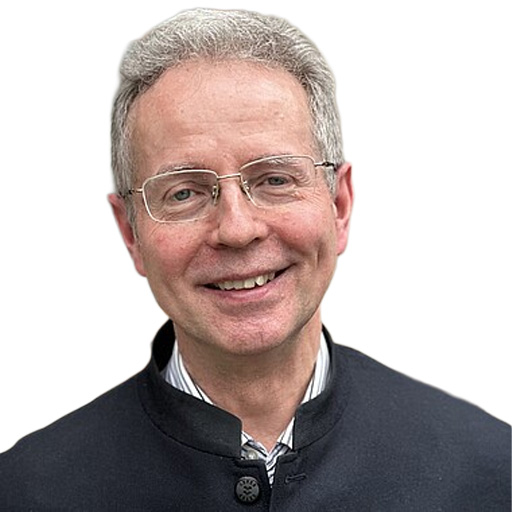
Keynote Speaker 4
Prof. Stephan Rothlin, SJ
Professor Emeritus, Faculty of Business and Law, University of Saint Joseph, Macau
Programme Director, AI Applied Ethics Project — World Ethics Institute & Institute for Advanced Humanistic Studies, Peking University, Beijing, China
A Brief Biography
Prof. Dr. Stephan Rothlin SJ, Professor Emeritus of the Faculty of Business and Law of the University of Saint Joseph, Macau, is the programme director of the AI Applied Ethics project of the World Ethics Institute and the Institute for Advanced Humanistic Studies at Peking University, Beijing, China.
Dr Stephan Rothlin, SJ, is an internationally recognised scholar in business ethics, moral theology, and responsible leadership. He holds a doctorate in Moral Theology from the University of Innsbruck, Austria, and currently serves as Programme Director of the AI Applied Ethics Project at the World Ethics Institute and the Institute for Advanced Humanistic Studies, Peking University. He is Emeritus Professor at the Faculty of Business and Law, University of Saint Joseph, Macau, where he continues to contribute to research and academic leadership.
Since relocating to China in 1998, Prof. Rothlin has dedicated his scholarship to international business ethics, Social Teaching, artificial intelligence ethics, and cross-cultural management, with particular emphasis on China and India. He is Editor of the Macau Ricci Institute Journal and an affiliate of the Integral Ecology Network at the Laudato Si' Institute, Campion Hall, University of Oxford. As CEO of Rothlin Management Consulting Ltd. in Beijing and Hong Kong, he advises organisations on corporate social responsibility, ethical leadership, and cross-cultural literacy. Through his research, teaching, and consulting, Prof. Rothlin has made significant contributions to advancing ethical business practices, responsible AI governance, and values-based leadership in a global context.
Conclave Abstract
Keynote 4 · 11:30 AM – 12:10 PM
Keynote Address
Moral Leadership and Comparative Spirituality in a Changing World of Artificial Intelligence: A Roadmap of AI and Applied Ethics
Prof. Stephan Rothlin, SJWorld Ethics Institute & Peking University, Beijing, China
The rapid advancement of artificial intelligence and emerging digital technologies presents unprecedented opportunities alongside profound ethical challenges. This presentation proposes a humanistic and cross-cultural framework for promoting ethical standards, policies, and practices that guide the responsible development and application of AI. Focusing particularly on the perspectives of China and India, it examines how technological innovation can be aligned with ethical responsibility, cultural diversity, and the pursuit of the common good in an increasingly interconnected world.
The presentation argues that the future of AI requires a balanced integration of scientific and technological progress with the insights of the humanities, ethics, and spirituality. Rather than reinforcing narrow or biased perceptions of reality, AI should contribute to a new economic and social paradigm that prioritises human dignity, social well-being, and ecological sustainability. Such an approach encourages collaboration among scholars, policymakers, industry leaders, and technology practitioners to develop responsible and inclusive AI solutions.
Grounded in Rabindranath Tagore's vision of the “spiritual unity among human beings” and inspired by Hans Küng's call for global ethical dialogue, the presentation explores how the wisdom traditions of both East and West can provide enduring ethical foundations for AI governance and innovation. By fostering dialogue across cultures, languages, and religious traditions, it highlights the potential of comparative spirituality to strengthen moral leadership, social innovation, and international cooperation.
The session concludes by demonstrating how AI-driven initiatives, informed by shared human values and intercultural understanding, can inspire networks of ethical influence and contribute to peace, responsible innovation, and sustainable development. It invites participants to reimagine artificial intelligence not merely as a technological advancement but as a catalyst for human flourishing and the common good.
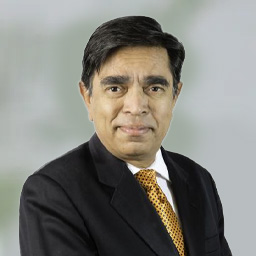
Panel Moderator
Prof. Arup Varma
Professor of Management and Frank W. Considine Chair in Applied Ethics, Quinlan School of Business, Loyola University Chicago, USA
A Brief Biography
Prof. Arup Varma is Professor of Management and the Frank W. Considine Chair in Applied Ethics at the Quinlan School of Business, Loyola University Chicago, USA. An internationally recognised scholar in human resource management, organisational behaviour, and business ethics, he has made significant contributions to research on performance management, expatriate management, leadership, and the ethical implications of emerging technologies in organisations. He earned his PhD in Industrial Relations and Human Resources from Rutgers University, USA, an MS in Personnel Management and Industrial Relations from XLRI, Jamshedpur, India, and a Bachelor's degree in Economics from St. Xavier's College, Kolkata.
Prof. Varma has published more than 125 peer-reviewed journal articles, over 50 book chapters, and several influential books. His research has appeared in leading journals, including the Academy of Management Journal, Personnel Psychology, Journal of Applied Psychology, and the International Journal of Human Resource Management. A recipient of numerous awards for research, teaching, and service, he is also a Fulbright Professional Excellence Award recipient and a Distinguished Alumnus of XLRI. He is the co-founder and former President of the Indian Academy of Management, and his current research explores ethical leadership, AI-augmented human resource management, global talent management, and the future of work in the digital era.
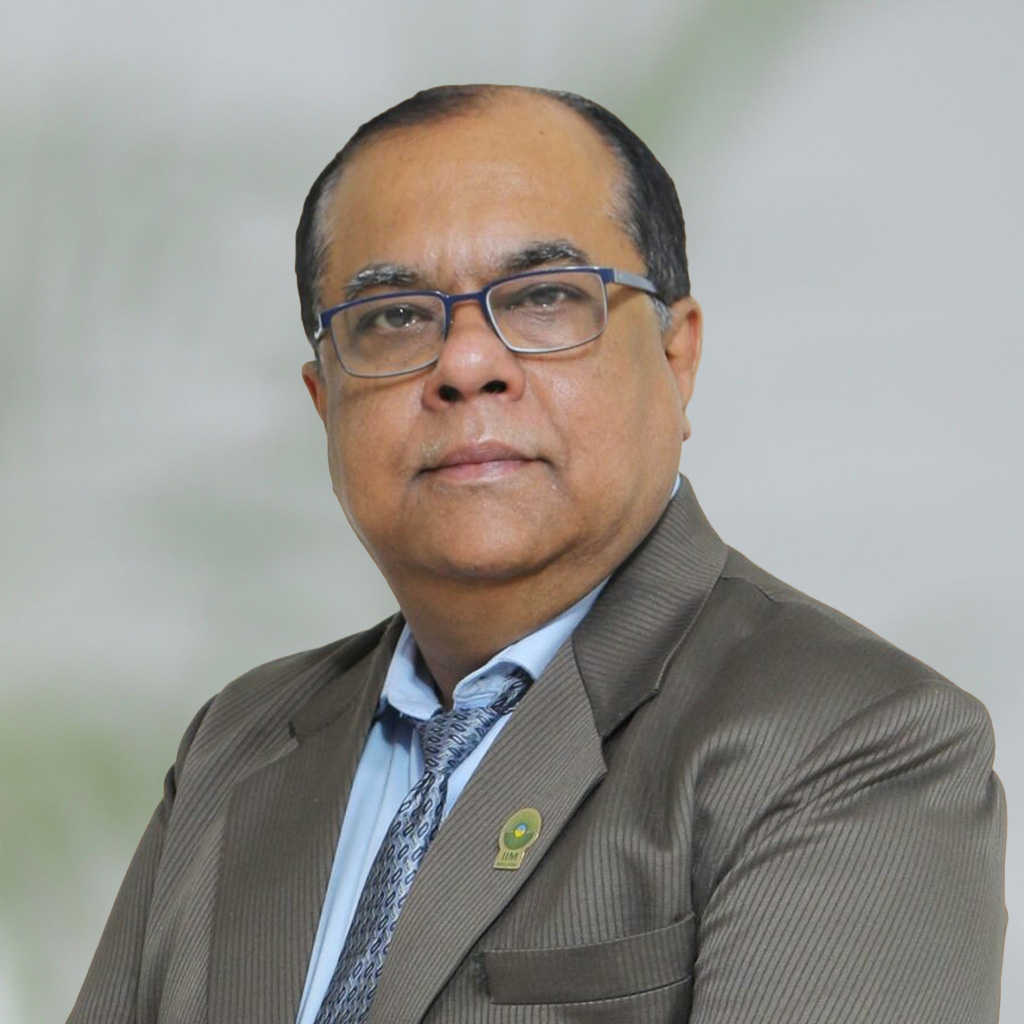
Panel Moderator
Prof. Sanjoy Mukherjee
Professor, Indian Institute of Management (IIM) Shillong, India
A Brief Biography
Prof. Sanjoy Mukherjee is Professor at the Indian Institute of Management (IIM) Shillong, where he has played a pioneering role in advancing the integration of Indian wisdom traditions, spirituality, ethics, and sustainability into management education. His teaching and research span business ethics, responsible leadership, organisational behaviour, sustainability, and the application of Indian philosophical thought to contemporary management practice.
An internationally recognized scholar, Prof. Mukherjee has contributed extensively to the global discourse on values-based management and responsible business. His work emphasizes the relevance of indigenous knowledge systems, contemplative practices, and ethical leadership in addressing contemporary organizational and societal challenges. He has collaborated with leading international scholars and institutions to promote interdisciplinary research on spirituality and management.
Prof. Mukherjee is the co-editor, with Prof. Laszlo Zsolnai, of the Springer volume Global Perspectives on Indian Spirituality and Management: The Legacy of S. K. Chakraborty (2022), which brings together international perspectives on Indian spiritual traditions and their contributions to management thought. Through his research, publications, and academic leadership, he continues to champion a holistic vision of management that promotes human flourishing, ecological responsibility, and the common good. His work has significantly contributed to positioning IIM Shillong as a global center for scholarship on spirituality, ethics, and sustainable leadership.
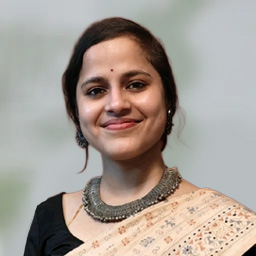
Session Chair · Panel Moderator
Dr. Sai Bhargavi Vedula
Assistant Professor, XLRI Xavier School of Management, Jamshedpur, India
A Brief Biography
Dr Sai Bhargavi Vedula is an Assistant Professor at XLRI Xavier School of Management, Jamshedpur, where she teaches and conducts research in the areas of organisational behaviour, leadership, business ethics, and responsible management. Her scholarship explores the intersections of workplace spirituality, ethics, human values, and sustainable organisational development, with a particular interest in how inner development influences leadership effectiveness, employee well-being, and organisational performance.
Dr Vedula's research integrates insights from management studies, psychology, and Indian knowledge traditions to examine ethical decision-making, values-based leadership, and the cultivation of compassionate and purpose-driven organisations. She has presented her work at national and international conferences and contributes to advancing scholarship on responsible leadership and human-centred management. As an educator, she is committed to fostering reflective learning environments that encourage critical thinking, ethical awareness, and holistic personal development among future managers.
At XLRI, Dr Vedula actively engages in teaching, research, and academic collaborations that promote sustainable management practices and the integration of ethics and spirituality into management education. Her work contributes to the growing global dialogue on creating organisations that support human flourishing, social responsibility, and long-term sustainability.
We warmly invite you to be a part
of this global dialogue
Registration is free · Advance registration is mandatory
This conclave also serves as a preparatory academic forum for the International Conference on Spiritual Intelligence in Leadership, to be held at XLRI, Jamshedpur, on 5–7 February 2027.
The Zoom meeting link, final programme schedule, and joining instructions will be emailed to all registered participants approximately 24 hours before the conclave.